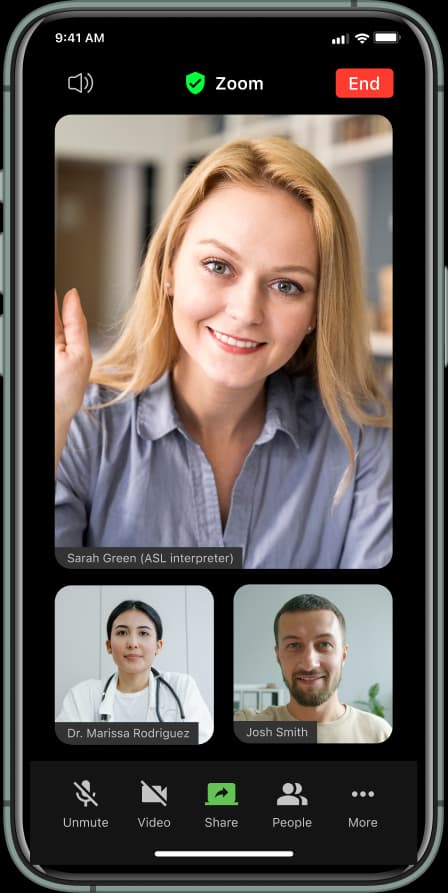
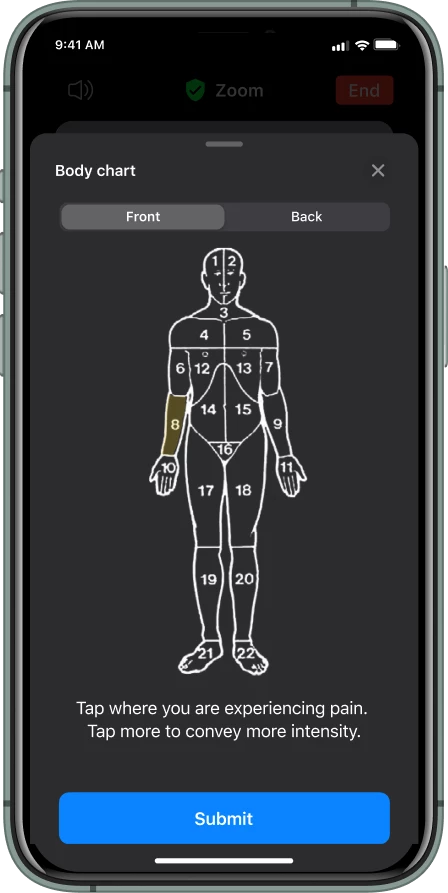
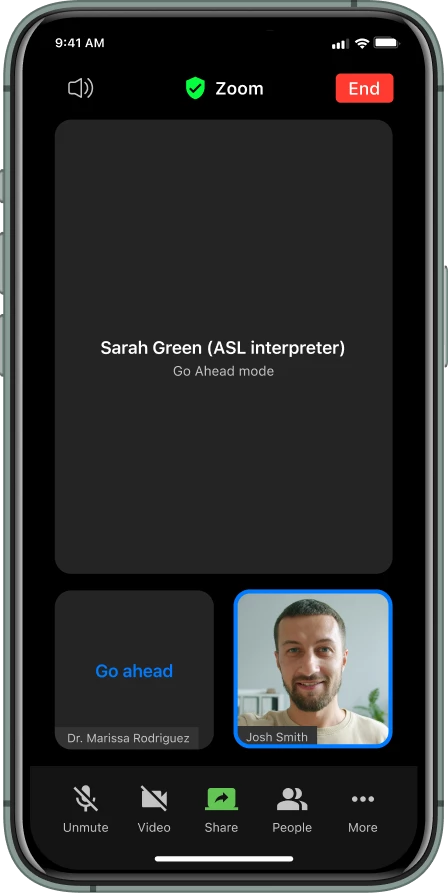
Many d/Deaf and hard-of-hearing (DHH) people face many barriers accessing healthcare such as communication challenges, lower health-literacy, and risk of marginalization. Telehealth shows promise addressing inequities to healthcare as literature shows how it improves access to healthcare. Partnering with the Administration for Community Living, which is part of the US department of Health and Human Services, my masters program capstone project was to increase the holistic well-being of DHH people by making telehealth more accessible. Specifically, the goal was to design a Zoom extension that can solve this problem.
For this project, I conducted user interviews. Two were conducted with experts: a DHH advocacy group member and a DHH healthcare provider who serves DHH patients. Three interviews were conducted with DHH individuals who all had experiencing using telehealth. To make the sessions accessible, an American Sign Language (ASL) interpreter was provided when requested at no cost to the participants. After key insights were uncovered, an initial design was created and was concept tested to determine whether they met their needs . Overall, the designs were recieved very well except for one feature which was ultimately removed.